
Refrigeration is the load solar suits best. Compressors run all day, every day, and they work hardest on hot afternoons when panels produce the most. We design and install rooftop solar for cold stores, frozen and chilled food warehouses, and food and drink processing plants across mainland Spain and the Balearic Islands.
We carry out the assessment, the design, the procedures, the installation and the commissioning, and we plan the works so the cold chain is never at risk.
Request a cold storage solar assessment
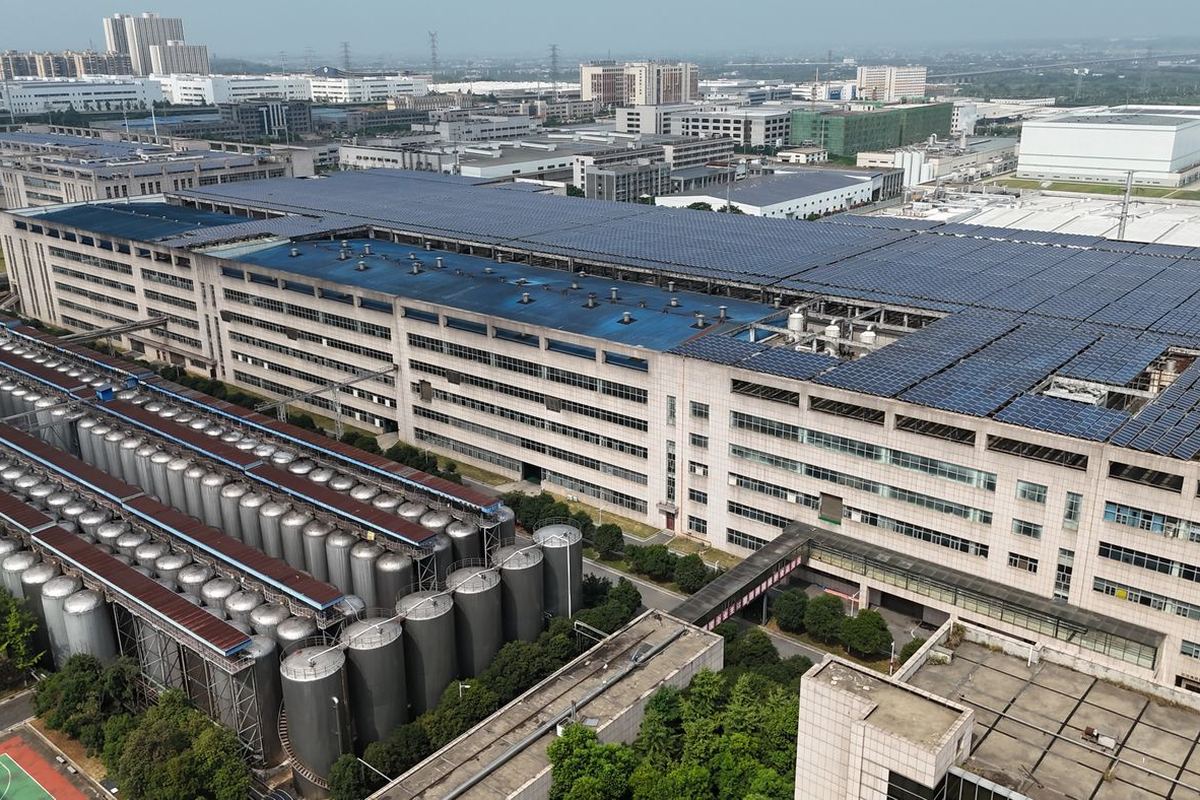
Why refrigeration and solar match
A cold store's demand rises with the outside temperature. In a Spanish summer, compressor load climbs through the late morning and peaks in the afternoon, the same hours as peak solar output. Because the store never closes, there is no weekend surplus to speak of. A well-sized system on a cold store can expect to use almost everything it generates.
Food processing adds production loads on top: chilling, freezing tunnels, washing, cooking, packing lines and compressed air. Shift patterns shape the profile, and we model it from your interval consumption data rather than from the annual bill.
Using the cold store as a battery
A cold store holds a large amount of cold. With the right controls, the refrigeration plant can pull the temperature down to the lower end of its permitted range while the sun is shining, then coast through the late afternoon and early evening when electricity is dearer and solar output falls. The stored product does the job a battery would do, at no extra hardware cost.
How far this can go depends on the product, the permitted temperature band and your refrigeration controls. We look at it during the assessment and, where it works, design the system with it in mind. Your refrigeration engineer stays responsible for set points; we provide the generation data and the timing.
Roofs on cold stores
Cold stores usually have large, insulated sandwich-panel roofs with very few penetrations, and the insulation must not be compromised. We use fixing systems designed for sandwich panels and confirm with the panel manufacturer's data and a structural check that the roof can take the load. Condensers and evaporative coolers on the roof need clear airflow and access, and we keep the array away from them.
Some older processing buildings have fibre-cement roofs. Anything that may contain asbestos has to be checked by a specialist before we design the fixings.
Hygiene and operations during the works
Food sites have hygiene zones, controlled access and audit requirements. We agree routes, working areas and storage with your quality team before we start, keep all work outside production areas wherever possible, and follow your site rules for contractors.
The connection to the main switchboard needs a planned interruption. We schedule it with your maintenance and refrigeration teams for a time when the product can safely ride through it, and keep it as short as possible.
Cost and return for cold storage
Cold storage projects generally fall within the national range for commercial rooftop solar, broadly €500 to €1,200 per kWp installed before IVA, with large roofs towards the lower end. Because almost all the output is used on site and refrigeration peaks in expensive afternoon periods, cold stores tend to sit among the stronger returns we model. We show you low, central and high cases from your own data.
Cold store roofs often support systems above 100 kW. Our page on large commercial solar systems explains what changes at that size, and our industrial and warehouse solar page covers ambient warehouses and factories.
Frequently asked questions
Will fixing panels damage the roof insulation? No. We use mounting systems designed for sandwich-panel roofs, which fix to the profile without crushing or piercing the insulation core, and we confirm the method against the panel manufacturer's data.
Can solar reduce our contracted capacity? Sometimes. If peak refrigeration demand coincides with solar output, the demand drawn from the grid falls at those times. Whether you can safely reduce contracted capacity depends on your night and cloudy-day peaks, and we check it from your interval data.
Do you work with our refrigeration contractor? Yes. We share the generation profile and agree the timing of the connection with them, and they remain responsible for the refrigeration plant and its controls.
We run a processing plant, not just storage. Is it the same? The principle is the same, but production lines and shift patterns change the profile. We model the plant as a whole from your consumption data.
Request a cold storage solar assessment
Send us the location, the type of product stored or processed, the operating hours and a recent electricity bill. We will check the figures and tell you whether the site is worth surveying, at no cost to you.