
A commercial battery stores electricity for later: solar surplus moved into the evening, imports shifted out of expensive tariff periods, short peaks trimmed to avoid excess-power charges, and backup for critical loads. We size it from your interval data and show its return separately from the solar.
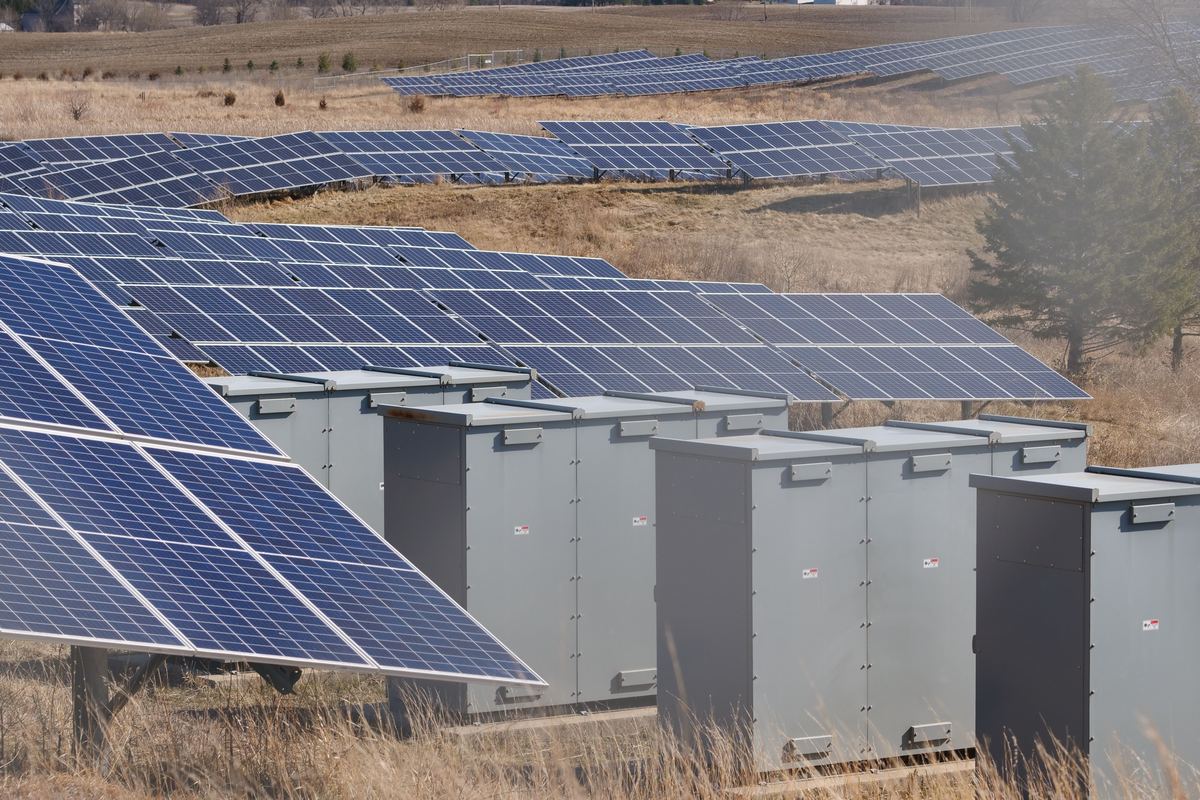
Four jobs a battery can do
Use more of your solar. Midday surplus is stored and used in the late afternoon and evening, instead of being exported at a lower value or curtailed.
Shift imports between tariff periods. On 3.0TD and 6.1TD tariffs the same kilowatt-hour costs more in some periods than others. A battery can charge when electricity is cheap and discharge in the dearer periods.
Trim peaks. Short demand peaks, from compressors, kilns, lifts or vehicle charging, can trigger excess-power charges or force a higher contracted power. A battery can cover the peak so the meter does not see it.
Back up critical loads. With a backup-capable inverter and the right switching, a battery can keep selected circuits running during a power cut. Since the Iberian blackout of 28 April 2025, more of our clients ask about this.
When a battery pays
A battery earns money only from the difference it makes, so the case depends on your consumption pattern and tariff. It tends to work where the business has significant evening or night demand, where the solar system produces regular surplus, where the spread between tariff periods is wide, or where short peaks are costing money in excess-power charges. It rarely works where the solar output is already fully used on site.
We evaluate the battery separately from the solar. The solar case should stand on its own, and the battery should be judged on what it adds, as we explain in our guides to payback and return and sizing around electricity use.
How we size a commercial battery
A battery has two sizes: its power in kW, which sets how fast it can charge and discharge, and its capacity in kWh, which sets how long it can do so. Peak shaving needs power more than capacity; moving solar into the evening needs capacity. We size both from quarter-hourly or hourly consumption data, ideally a full year from Datadis, and from the solar model.
We also look at how hard the battery will work. Warranties are usually stated in years and in total energy throughput, whichever comes first, so a battery cycled twice a day ages faster than one used for backup. We show the expected cycles and the replacement assumption in the numbers.
Already have solar and see surplus on your bills? Send us your consumption data and we will tell you whether a battery would pay.
Request an assessment ↗With new solar or added to an existing system
With a new installation, the battery can share a hybrid inverter with the panels, which saves equipment. Added to an existing system, it is usually connected on the AC side with its own inverter, so the original installation stays as it is. Either way we check the existing equipment, the protections and the zero-export settings before we design.
Storage connected with a self-consumption installation is registered with it, and the paperwork follows the same route as the solar. Our permissions and grid connection guide explains the stages.
Siting and safety
Commercial batteries come as indoor racks, outdoor cabinets or containers. We place them with your insurer's requirements, fire separation, ventilation, access for maintenance and cable routes in mind, and the battery management system monitors cell temperatures and voltages continuously. For larger systems we discuss fire detection and suppression with you and your insurer before we fix the location.
What a battery costs
Storage is priced separately from the solar and can add substantially to the total, which is why we show it as its own line with its own return. The price depends on capacity, power, the inverter arrangement, siting works and any backup switching. We give you the figures with and without the battery so you can decide on the difference.
Frequently asked questions
Can we add a battery to solar we already have? Usually yes. Most existing systems can take an AC-coupled battery with its own inverter, leaving the original installation unchanged. We check the existing equipment and settings first.
Will a battery run the whole site in a power cut? Rarely, and it does not need to. Backup is designed for selected critical circuits, such as servers, refrigeration controls or ventilation, with switching that isolates them from the grid when it fails.
Can a battery let us reduce our contracted power? Sometimes. If your peaks are short and predictable, a battery can cover them and allow a lower contracted power or avoid excess-power charges. We test this against quarter-hourly data before recommending it.
How long does a commercial battery last? It depends on how hard it works. Warranties are usually stated in years and in total energy throughput, whichever comes first. We show the expected cycling and include a replacement assumption in the return.
Request an assessment
Send us the location, what the electricity is used for, the months you use most and a recent bill or your Datadis data. We will review it and tell you whether a site visit is worthwhile. The first review is free.