
Solar irrigation pumping runs borehole, river and booster pumps from photovoltaic panels during daylight. We design grid-connected systems for metered pumping stations, direct-drive systems for wells away from the grid, and hybrids that fill a reservoir while the sun is up.
Why irrigation suits solar
Irrigation is the load that matches solar most closely. Pumps run in daylight, the heaviest pumping falls between spring and late summer when panels produce the most, and the electricity bill for a pumping station is often the largest running cost a farm or irrigation community controls.
Modernisation has made that bill bigger. Moving from flood irrigation to drip and sprinklers saves water, but pressurised networks need pumps that open canals did not, so many farms and communities now use far more electricity than they did twenty years ago. Solar brings the cost of that electricity down without touching the water savings.
Three ways to run a pump on solar
Grid-connected. The array connects to the pumping station's existing supply. Solar covers the pumps while it is generating and the grid covers the rest, so pumping never depends on the weather. This suits metered stations that already have a contract and need to pump at night or on demand.
Direct-drive. The array feeds the pump through a solar variable-speed drive, with no grid connection. The pump speeds up and slows down with the sunlight. This suits boreholes and remote wells where bringing in a supply would cost more than the panels, and it is the simplest system to run.
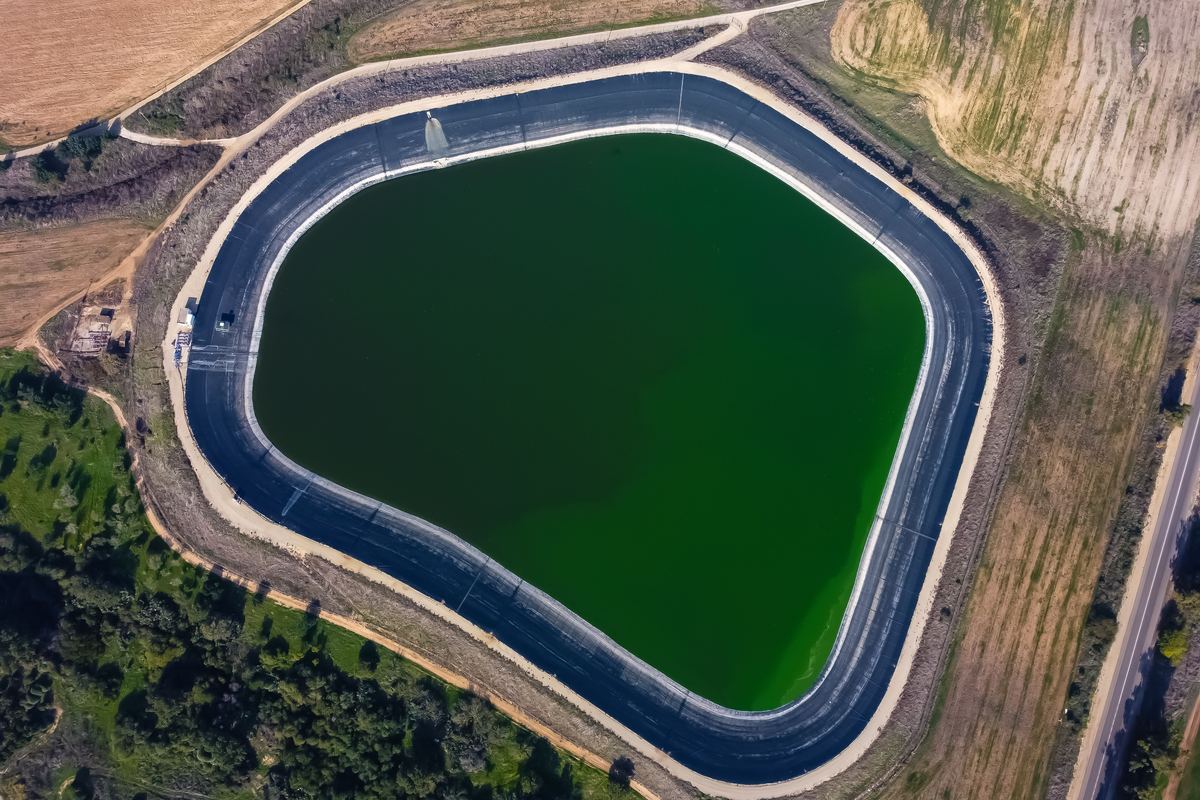
Hybrid with a reservoir. The pumps fill a reservoir or balsa during the day, mostly from solar, and the irrigation network draws from the reservoir when the crop needs it. The water does the job a battery would do, at a fraction of the cost. Where night pumping is unavoidable we can add grid backup or a battery, and we show you the cost of each option. Our commercial battery storage page explains when storage pays.
Sizing around the pumping campaign
We size the system from the pumps and the irrigation calendar, not from the roof or the plot. We need the pump data (motor power, flow, head and how the pump is controlled), the months you irrigate and, for metered stations, the hourly consumption from Datadis. From that we model how many hours a day the panels can drive each pump through the season.
For direct-drive systems we usually install more panel capacity than the drive needs, so the pump reaches useful flow earlier in the morning and keeps it later into the evening. On ground-mounted arrays, single-axis trackers can lengthen the pumping day further, and we compare them with fixed structures on cost per cubic metre pumped. Where you already have a variable-speed drive, we check whether it can take a solar input before suggesting a new one.
Send us your pump details and last season's bills. We will tell you which of the three set-ups fits your site, at no cost.
Request an assessment ↗Contracted power and the irrigation bill
Most irrigation supplies sit on 3.0TD or 6.1TD tariffs, and a large part of the bill is the fixed power term, paid all year for capacity that is only needed during the campaign. The irrigators' federation Fenacore has long argued that fixed costs make up most of an irrigation community's electricity bill. Solar reduces the energy you buy; on its own it does not reduce the power term.
Two rules help. Real Decreto 88/2026 allows consumers with seasonal demand, irrigation above all, to change their contracted power temporarily during the year, once the CNMC has set the corresponding charges. And irrigation supplies can claim an 85% reduction in the taxable base of the electricity tax under article 98 of Ley 38/1992, which has to be applied for and is not automatic. We model the solar case on your tariff as it stands, show what a seasonal power change would add, and flag the tax reduction if you are not already receiving it. Our guide to business electricity tariffs explains the periods and charges.
Irrigation communities and large estates
For comunidades de regantes we work with the board and the technical manager on the community's pumping stations, filtration heads and booster stations. Arrays can go on community land next to the station, on buildings and over reservoirs. Where members' own supplies are within reach, collective self-consumption lets one installation serve several supplies; since March 2026 photovoltaic installations of up to 5 MW can share their energy with consumers up to 5 km away. Our page on solar for agricultural cooperatives covers how sharing is organised.
Ground-mounted arrays on agricultural land follow municipal and regional procedures that take longer than a rooftop, and we confirm the route for your plot before we give you a programme. Community schemes above 1 MW we deliver together with a utility-scale construction partner, with our team as your single point of contact.
What a solar pumping system costs
Pumping systems are priced on their own components: panels, structure, cabling to the pump, the drive or inverter and any reservoir works. Ground structures cost more than rooftop mounting, and trackers more than fixed structures. We list each item separately so you can see what drives the price.
The return depends on how many pumping hours fall inside the generating window and on the price of the electricity those hours displace. Direct-drive systems replacing diesel generators usually pay back fastest, because diesel is the most expensive energy on a farm. We show low, central and high cases from your own figures, as we explain in our guide to payback and return.
Frequently asked questions
Does a solar pump keep working on cloudy days? It keeps working at reduced flow. On a direct-drive system the pump slows down when the light drops, so we size the array and the reservoir to cover the water you need across a run of poor days. A grid-connected or hybrid system simply draws more from the grid.
Can we keep our existing pump? Often yes. Most standard three-phase pump motors can be run from a solar variable-speed drive. We check the motor, its insulation and the pump curve before we design anything, and only suggest a new pump where the old one would limit the system.
We only irrigate for four months. Is solar still worth it? It depends on what the panels can do for the rest of the year. Surplus can be exported, shared with nearby supplies through collective self-consumption, or used by farm buildings. We model each month so you can see the value of the off-season output before you decide.
Do you replace diesel pumping sets? Yes. Replacing a diesel generator on a remote well with a direct-drive solar system is one of the clearest cases we see. We can keep the generator as a backup for dry spells if you want one.
Request an assessment
Send us the location, what the electricity is used for, the months you use most and a recent bill or your Datadis data. We will review it and tell you whether a site visit is worthwhile. The first review is free.