
Wineries, olive mills and fruit packhouses each work hardest for a few months and lightly for the rest. We size solar for these plants from their monthly consumption, so the panels cover the load that runs all year plus the seasonal peaks that fall in the sunny months.
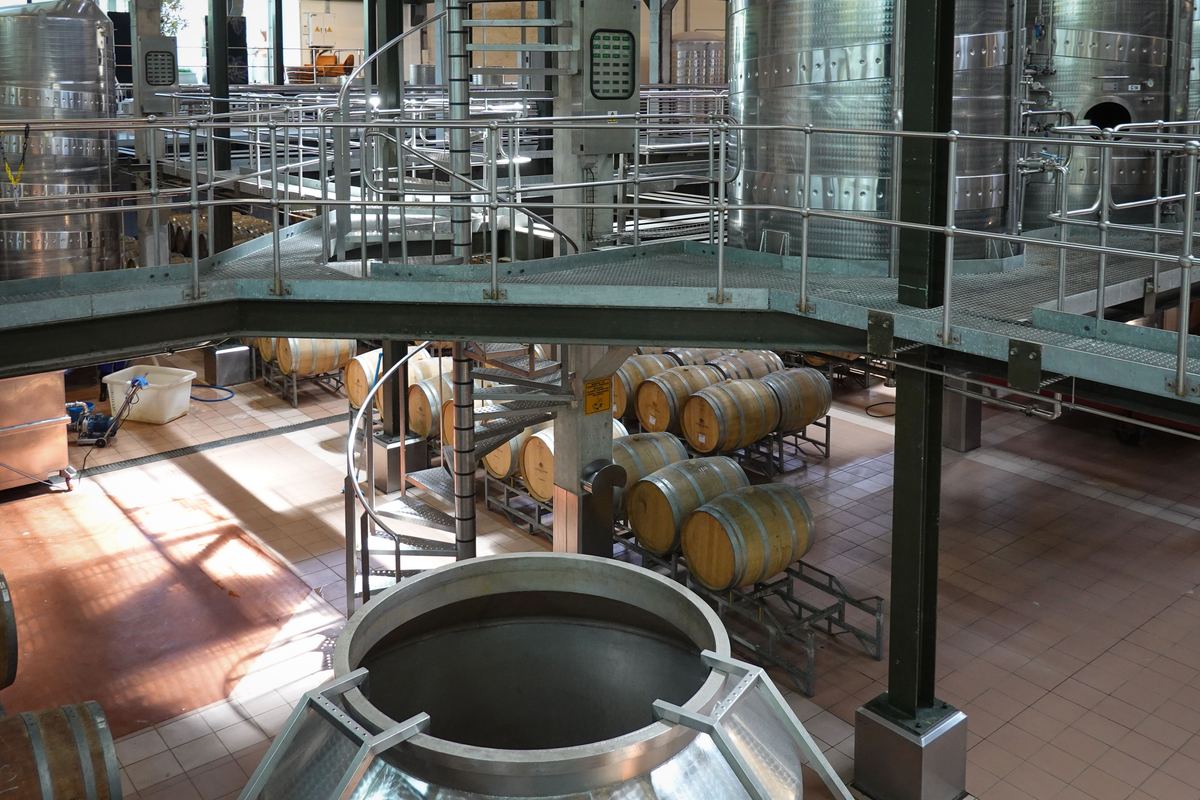
Wineries
A winery's year peaks at harvest. From late summer into autumn, reception, pressing, pumping and above all temperature control of fermentation push consumption up, and in much of Spain that happens while the sun is still strong. Outside harvest there is bottling, the cooling of barrel halls and stores in summer, offices and visitor areas.
That profile suits solar well. We size the system to the harvest-season daytime load and check what the panels produce in the quieter months, so surplus is planned for rather than discovered. Wineries with a shop, restaurant or tasting room add daytime demand that helps, and those planning heat pumps for hot water or cleaning can design the two together.
Olive oil mills
Olive mills are the harder case, because the campaign runs from roughly November to February, when the days are shortest. Mills, decanters and pumps work long hours during the campaign, often around the clock, and much less for the rest of the year.
The answer is usually a system sized to what the mill uses all year, the bottling line, storage, offices, cold rooms and any shop, rather than to the campaign peak. The campaign then takes everything the panels produce in winter, and little is exported in summer. Where the mill belongs to a cooperative, surplus in the quiet months can go to members through collective self-consumption, as explained on our page on solar for agricultural cooperatives.
Fruit and vegetable packhouses
Packhouses combine process lines with cold rooms. Washing, grading, calibrating and packing lines run in working hours, and cold rooms and pre-cooling tunnels run around the clock, peaking on hot afternoons. Citrus packing in the Valencian Community runs through autumn, winter and spring, while stone fruit in Murcia and Lleida peaks in summer.
The cold rooms give a steady daytime base, and the packing season sets the peak. We model both from your interval data. Cold rooms can also store cooling: running the compressors harder at midday lets the stored product carry the load into the evening, as our cold storage solar page explains.
Send us twelve months of consumption. We will show you, month by month, how much of the plant's load solar could carry.
Request an assessment ↗Roofs, hygiene and timing
Agri-food buildings tend to have large sandwich-panel or fibre-cement roofs. Sandwich panels take standard fixings once we have checked the structure. Fibre-cement roofs on older buildings may contain asbestos and need a specialist check before we fix anything to them. Where the roof is not usable, a ground array on the plot or a carport over the car park can take its place, as our page on solar carports explains.
We plan the works outside the campaign wherever we can, keep away from production and hygiene areas, and agree routes and storage with your quality team. The connection to the main switchboard needs a short planned shutdown, which we schedule at a time that suits the plant.
Cost and return
Rooftop systems on agri-food plants generally fall within the national range for commercial solar, broadly €500 to €1,200 per kWp installed before IVA. The return depends on how much of the output the plant uses itself in each month, and on the tariff periods it displaces. We show a low, central and high case from your own data, using the method in our guide to sizing around business electricity use.
Frequently asked questions
How much of a winery's harvest load can solar cover? Daytime harvest loads, including fermentation cooling, can often be covered to a large extent on sunny days, but night-time cooling still comes from the grid unless a battery is added. We show the split hour by hour from your consumption data.
Can we use the surplus in the months the plant is quiet? Surplus can be exported for compensation on your bill, shared with nearby supplies through collective self-consumption, or used by other loads on the site. We size the system so the surplus is a planned part of the return, not a large unused share.
Will installation interfere with the campaign? We plan the works outside the campaign wherever possible. Where that is not possible, we work in sections, away from production and hygiene areas, and agree the programme with you in writing.
Can panels go on an insulated sandwich-panel roof? Usually yes. We check the structure and the panel manufacturer's guidance, then use fixings designed for sandwich panels that keep the roof watertight and the insulation intact.
Request an assessment
Send us the location, what the electricity is used for, the months you use most and a recent bill or your Datadis data. We will review it and tell you whether a site visit is worthwhile. The first review is free.